AI Augmentation: Helping Your Business See What It Missed
An AI-assisted search of NASA data offers a useful lesson for business: help people investigate, compare and decide as well as automate routine work.
Businesses should use AI to make more of the information they already have.
Automating a reminder, entering an invoice or preparing a report can save time. AI can also help a person investigate a question they would otherwise leave unanswered because the work takes too long.
That is AI augmentation: giving people more capacity to examine information, test an idea and decide what to do. A recent astronomy story offers a useful example.
A possible planet in existing data
Pavel Rabtsevich, a product manager and amateur astronomy researcher, reported using AI tools to search public observations from NASA’s TESS space telescope. In his account of the work, he describes a repeating dip in the brightness of the known star TIC 4206066, appearing about every 3.18 days. He traced the signal into older observations from 2020 and 2018.
The finding is a possible planet orbiting that star. It remains unconfirmed.
Rabtsevich says Claude Code helped download and process the data, write search code, fit the signals, check alternative explanations and rerun failed tests. He chose the questions, the tests and the criteria for accepting a result. Separate AI sessions helped review the work.
The MIT TESS Science Office lists his follow-up observing programme as active. More observations can test the claim; approval to observe does not confirm a planet.
AI helped him carry out an investigation using data that was already available. The work still needed someone to define the question and challenge the answer.

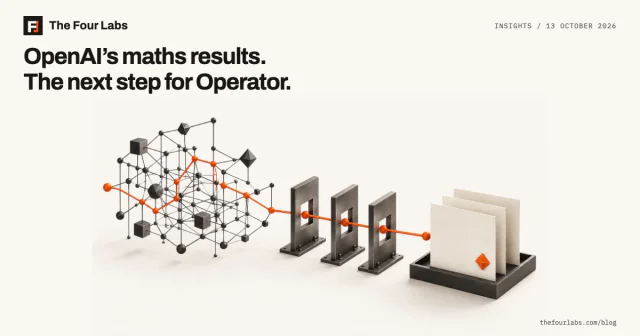
Original AI-generated editorial illustration of human investigation across astronomy and business records. The patterns are conceptual.
Give people time to investigate
A business has its own unanswered questions spread across emails, orders, job records and spreadsheets.
Why do certain jobs keep losing margin? Which customer requests are we declining because the answer takes too long to find? Why does one type of delivery repeatedly need a correction?
Consider a distributor whose team handles repeated urgent orders. Automating order entry would reduce the typing. An augmentation workflow could help the operations manager examine those orders alongside delivery dates, stock records and customer messages.
The manager might find that several “urgent” requests followed a missed replenishment, or that customers repeatedly asked for an alternative product the team had trouble locating. AI could gather the relevant records, group similar cases and prepare explanations to check.
Some explanations will be wrong. A late delivery record might reflect a late update in the system. The manager needs the original evidence and a way to correct the analysis before changing how the team works.
This is an illustrative workflow to build and test, rather than a claim about a customer result.
How we think about Operator
We are building Operator around the requests, records, rules and decisions that make a business run. Workflow automation is part of that work. Augmentation widens the purpose to helping people understand a situation and work through it.
For the distributor, that could mean a manager asking Operator to investigate recurring urgent orders, reviewing the evidence, then deciding whether to change a replenishment rule or contact a customer.
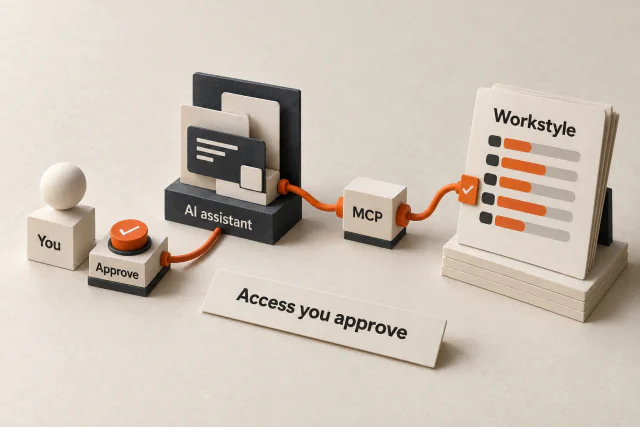
AI helps interpret the request and examine the records. Tested code handles calculations and business rules. People resolve uncertainty and approve actions that need their judgement. The workflow should keep the supporting records beside its findings and check that approved changes were saved.
The exact work depends on each business’s data, connected systems and permissions. We develop and test a defined workflow with the team before expanding it. The astronomy example gives us a reason to explore this approach; it does not prove how well any business workflow will perform.
Start with one unanswered question
Choose a question your team already cares about but rarely has time to investigate. Gather the records they would use, agree on what a useful answer would contain and decide who will check it.
Measure the time spent reviewing the answer, the corrections needed and whether the team could make a better-supported decision. Those measures belong alongside hours saved when deciding where AI should go next.
Sources checked on 22 October 2026. The astronomy finding remains a candidate awaiting confirmation.
- Project
- Insights
- Section
- AI in Practice
- Written by
- The Four Labs
- Updated
- 26 Oct 2026